
Affordable Warehouse Automation Upgrades
25th Sep 2026
Warehouse Automation Without the Huge Investment: 7 Practical Upgrades That Pay Off
Warehouse automation has a reputation for being expensive.
Mention automation, and it’s easy to picture fleets of autonomous robots, sophisticated software, miles of powered conveyor, and a project budget that only the largest distribution centers could justify.
But warehouse automation doesn’t have to start with robots—or a massive capital investment.
For many warehouses, manufacturing facilities, stockrooms, and distribution centers, the best place to start is much simpler: identify the repetitive tasks that consume the most time and labor, then use the right material handling equipment to make those tasks faster, safer, and easier.
The result can be shorter travel times, less manual handling, improved ergonomics, better use of available space, and more consistent throughput.
Here are seven practical warehouse upgrades that can help automate material flow without requiring a complete facility overhaul.
1. Let Gravity Conveyors Move the Load
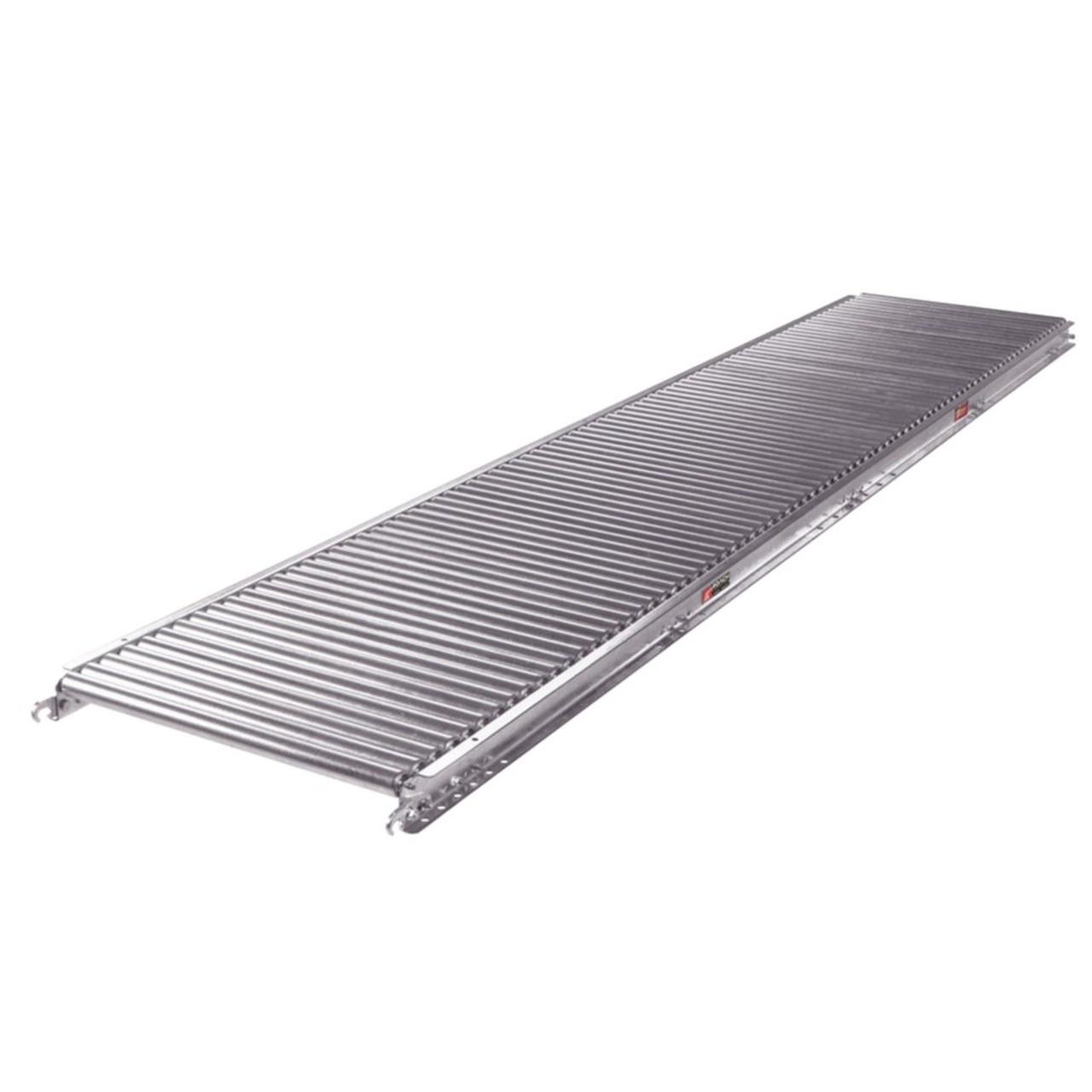
One of the simplest forms of warehouse automation doesn’t require electricity at all.
Gravity roller and skatewheel conveyors use gravity and momentum to move cartons, totes, packages, and other loads between work areas. Instead of employees repeatedly carrying products from one station to another, the conveyor creates a dedicated path for material movement.
This can be especially effective in:
- Packing and shipping areas
- Order fulfillment operations
- Assembly lines
- Receiving departments
- Pick-and-pack stations
- Loading and unloading areas
Gravity conveyor is relatively simple to install, and systems can often be expanded or reconfigured as an operation changes.
For facilities still relying heavily on employees carrying or carting individual cartons between nearby workstations, adding conveyor can eliminate hundreds—or even thousands—of unnecessary steps during a shift.
Best opportunity: Look for short, repetitive product movements that happen all day. If employees continually move the same types of loads between the same two points, a conveyor may be able to do the traveling for them.
2. Upgrade High-Volume Routes to Powered Conveyors
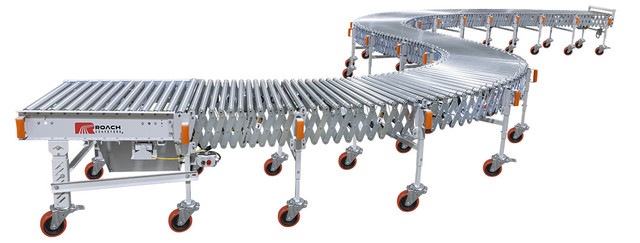

When volume increases, gravity alone may no longer provide enough control or throughput.
Powered conveyor systems can continuously transport products through receiving, production, picking, packing, and shipping areas while reducing the amount of manual movement required from employees.
Belt conveyors are useful for moving a wide variety of products, while powered roller conveyors can be particularly effective for cartons, totes, and other loads with suitable bottom surfaces.
The biggest advantage isn't simply speed. It's consistency.
A properly designed conveyor system establishes a predictable material flow through the facility. Products move along a defined route rather than depending on an employee being available every time something needs to travel from Point A to Point B.
Powered conveyors can be especially valuable when:
- Products travel longer distances
- Material moves continuously throughout the day
- Production depends on predictable flow
- Employees spend significant time transporting goods
- Shipping or packing stations regularly experience bottlenecks
You don't need to automate an entire building at once. Automating one high-volume route can be an excellent starting point.
3. Bring the Work to the Employee With Lift Tables and Positioners
Not every automation improvement is about moving products across the warehouse.
Sometimes the biggest improvement comes from reducing how much employees have to bend, reach, lift, and reposition a load.
Lift tables and pallet positioners allow loads to be raised or lowered to a more comfortable working height. Instead of an employee repeatedly bending toward floor level as a pallet is unloaded, the equipment helps keep the work closer to an ergonomic position.
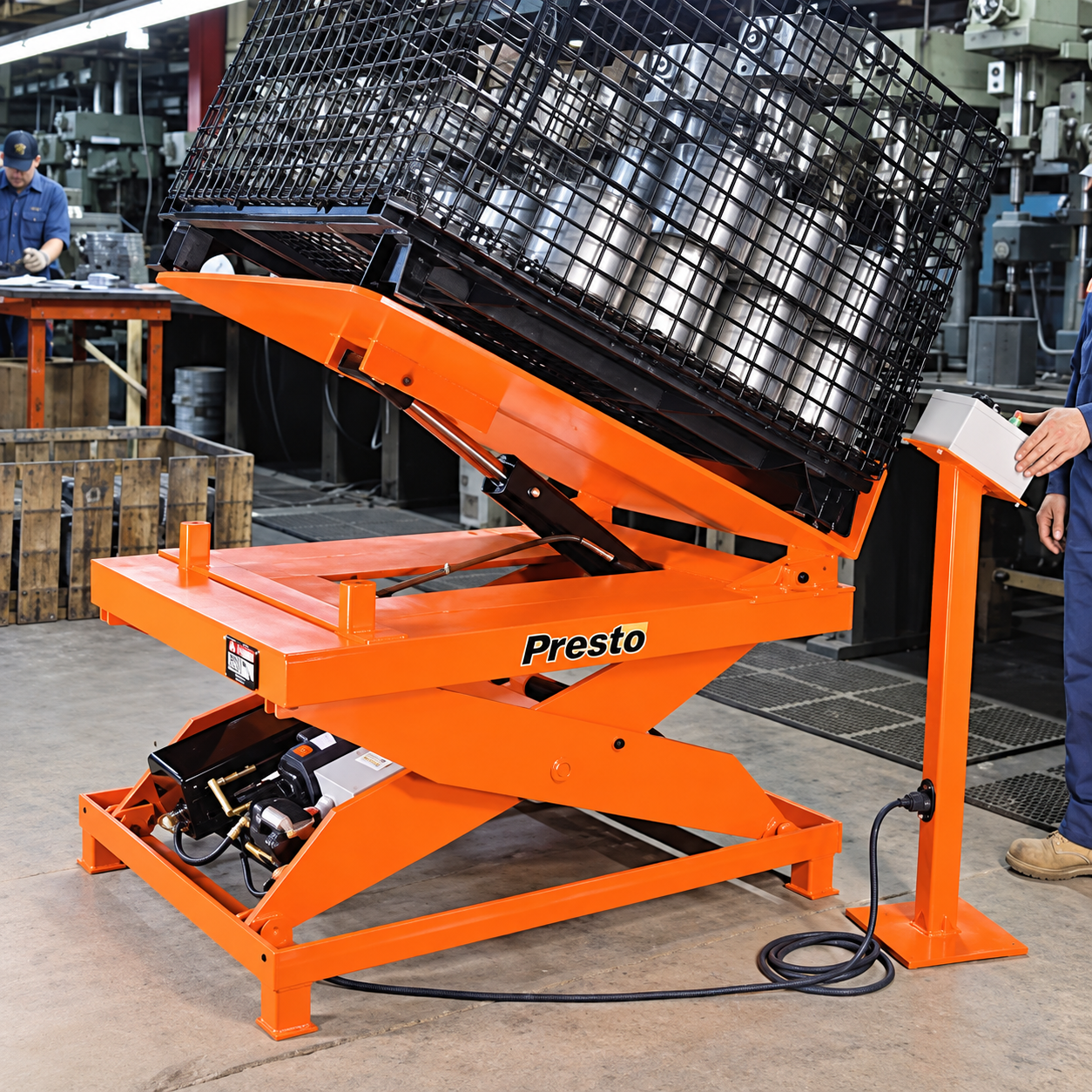
These systems can be useful for:
- Pallet loading and unloading
- Assembly operations
- Packaging
- Machine feeding
- Work cells
- Manufacturing processes
This type of equipment can improve productivity while also addressing one of the most physically demanding parts of material handling: repetitive lifting and awkward positioning.
Think of it as ergonomic automation. The equipment automatically puts the material where the employee can work with it more efficiently.
4. Electrify Repetitive Pallet Movement
Manual pallet jacks are indispensable warehouse tools, but they're not necessarily the best solution for every pallet move.
When employees regularly transport heavy pallet loads or travel longer distances, electric pallet trucks and other powered material handling equipment can reduce the physical effort required to move those loads.
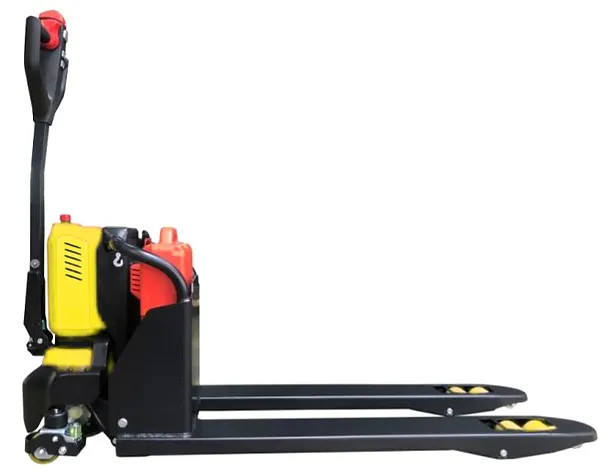
The productivity difference becomes increasingly important as travel distance and frequency increase.
Consider upgrading powered pallet handling equipment when:
- Pallets move continuously throughout the shift
- Travel distances are increasing
- Loads are consistently heavy
- Employees are spending excessive time transporting pallets
- Manual movement is contributing to fatigue
The goal isn't to replace every manual pallet jack. Manual equipment still makes sense for many occasional and short-distance moves.
Instead, identify the routes where employees are doing the most work and use powered equipment where it can provide the greatest benefit.
5. Turn Storage Into Part of the Material Flow

Storage equipment doesn't have to be passive.
Carton flow rack and pallet flow rack can use gravity to automatically move inventory toward the picking or unloading position as products are removed.
Instead of employees reaching deep into shelving or repeatedly repositioning inventory, the next product moves forward.
Flow rack can be particularly effective for high-volume, first-in/first-out inventory and order picking operations.
Potential benefits include:
- Faster picking
- Improved product accessibility
- Better inventory rotation
- Reduced employee travel
- Higher storage density
- More organized replenishment
The biggest opportunity is often found in fast-moving SKUs.
If employees pick the same products hundreds of times per day, even a small reduction in the time required for each pick can become significant over thousands of transactions.
6. Automate Vertical Movement Instead of Using Valuable Floor Space
Warehouse efficiency isn't only about how quickly products move horizontally.
Sometimes the unused space above your operation is the bigger opportunity.
Mezzanines, vertical reciprocating conveyors, lifts, and related material handling systems can help facilities take advantage of vertical space while creating more efficient paths for moving products between levels.
This can be particularly useful when a growing operation is running out of floor space but relocating or expanding the building would be significantly more expensive.
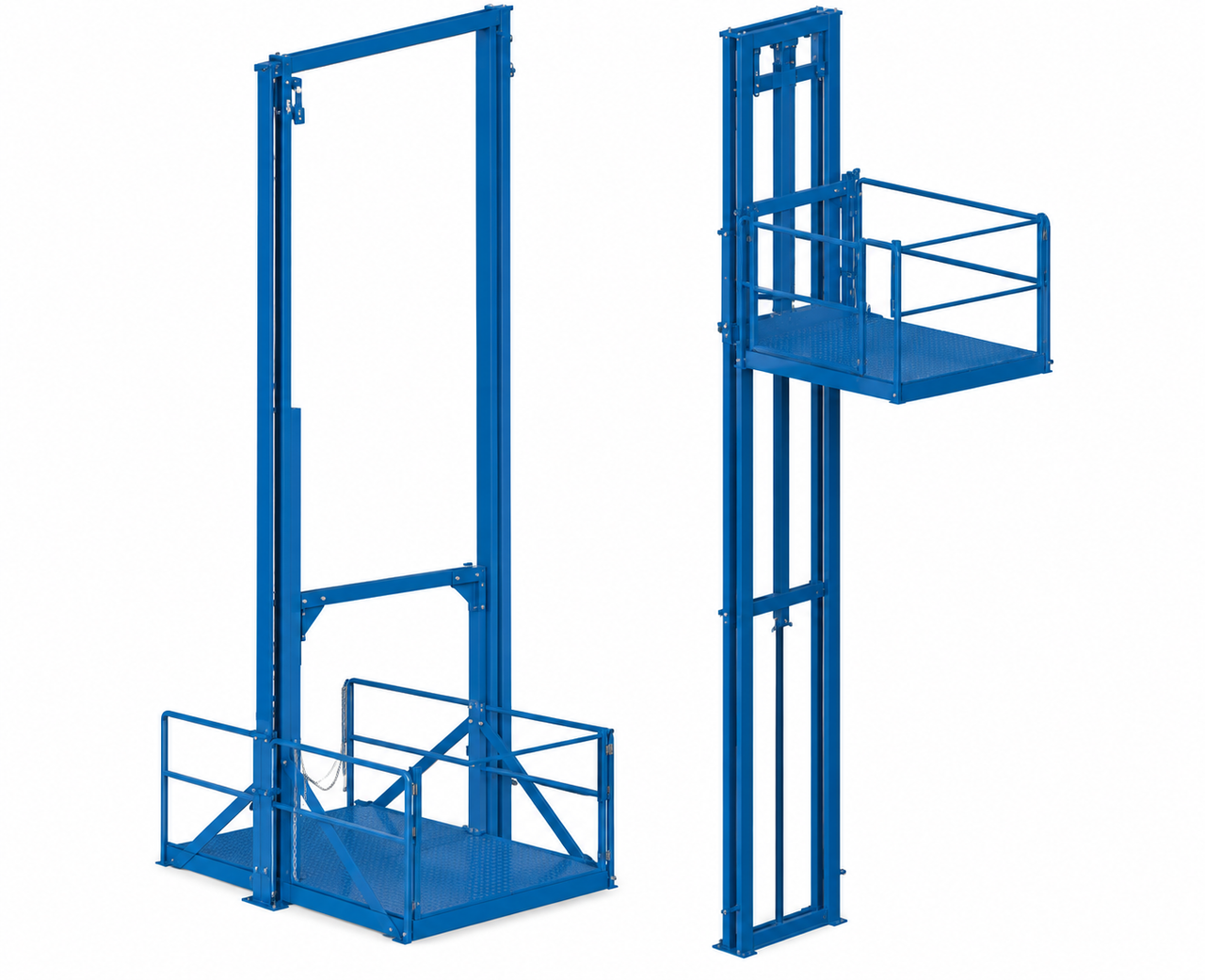
Using vertical space can create room for:
- Additional storage
- Picking areas
- Production space
- Offices
- Work platforms
- Equipment
When multiple levels are involved, the method used to move materials between them becomes critical. A properly designed vertical material handling system can make the additional space practical without creating a new labor bottleneck.
Before assuming your warehouse needs more square footage, look up.
7. Build Better Workstations and Mobile Workflows

Some of the best productivity improvements happen within just a few feet.
Packing stations, assembly areas, maintenance departments, and production work cells often accumulate inefficiencies over time. Supplies get stored wherever they fit. Tools migrate away from where they're used. Employees walk back and forth for materials that could have been within reach.
A well-designed workstation can change that.
Industrial workbenches, shelving, bins, carts, and mobile workstations can organize tools and materials around the actual workflow.
Mobile carts can go one step further by bringing supplies directly to the work instead of requiring employees to repeatedly return to a central storage location.
The principle is simple:
Reduce unnecessary motion before trying to make that motion faster.

Look at your busiest work areas and ask:
- What does the employee reach for most often?
- Which supplies require them to leave the workstation?
- How often are tools or materials moved?
- Could commonly used inventory be positioned closer?
- Could a cart bring an entire kit or order to the point of use?
Small improvements multiplied across every employee, every shift, and every working day can produce surprisingly large productivity gains.
Where Should You Automate First?
The best warehouse automation project isn't necessarily the most advanced one.
It's the one that solves a real bottleneck.
Walk through your facility and look for three things: travel, repetition, and waiting.
Where are employees walking the farthest?
Which materials are being handled repeatedly?
Where does inventory sit waiting for someone or something else before it can move?
Those areas are strong candidates for improvement.
A warehouse that manually moves hundreds of cartons between packing and shipping may benefit from conveyor. A facility handling heavy pallets all day may get more value from powered pallet equipment. A busy picking operation may see greater gains from flow rack and better workstation design.
Start with the problem, then choose the equipment.
You Don't Have to Automate Everything
Warehouse automation doesn't have to be an all-or-nothing decision.
In many facilities, the smartest strategy is incremental automation: improve one process, measure the results, and then identify the next bottleneck.
A gravity conveyor here, a lift table there, a better picking system in your fastest-moving zone—each improvement removes a little more unnecessary labor from the process.
Over time, those improvements can create a dramatically more efficient operation without requiring a multimillion-dollar automation project.
And unlike highly specialized automated systems, many traditional material handling solutions can be expanded, relocated, or reconfigured as your operation changes.
Find the Right Material Handling Equipment for Your Operation
Every facility handles materials differently. Product size, weight, throughput, available space, employee workflow, and future growth all affect which equipment makes sense.
Material Flow supplies material handling and storage equipment for warehouses, manufacturing facilities, distribution centers, and commercial operations of all sizes.
Whether you're considering conveyors, lift tables, pallet handling equipment, flow rack, carts, shelving, workstations, mezzanines, or a larger material handling system, the right solution starts with understanding how material moves through your facility today.
Ready to eliminate a bottleneck? Explore Material Flow's material handling solutions or contact our team to discuss equipment for your operation.