Advanced Warehouse Slotting: A Guide to Optimizing Storage & Picking
4th Mar 2026
In the fast-paced world of modern logistics, warehouse efficiency is paramount. Every second and every square foot counts. While many factors contribute to a well-run warehouse, one of the most impactful yet often overlooked is warehouse slotting. A strategic approach to inventory placement can dramatically reduce operational costs, improve order fulfillment speed, and create a safer, more productive work environment. This guide will explore the principles of advanced warehouse slotting, from foundational strategies to cutting-edge techniques, providing a roadmap for optimizing your storage and picking operations.
What is Warehouse Slotting?
Warehouse slotting is the process of organizing and placing inventory in the most optimal locations throughout a warehouse or distribution center. The primary goal is to maximize efficiency by minimizing travel time for pickers, improving order accuracy, and making the best use of available space. This process involves analyzing product characteristics, demand patterns, and warehouse layout to determine the ideal spot for each stock-keeping unit (SKU).
Slotting can be broken down into two main components:
- Macro Slotting: This focuses on the overall warehouse layout, including the placement of different zones (e.g., fast-moving items, cold storage, hazardous materials) and the flow of traffic.
- Micro Slotting: This deals with the specific placement of individual items within a designated zone, down to the exact bin, shelf, or pallet location.
Effective slotting is not a one-time project but a continuous process of analysis and refinement. As inventory levels, product demand, and seasonal trends change, so too should your slotting strategy.
The "Golden Zone" and Ergonomics
A core concept in warehouse slotting is the "golden zone", which refers to the most accessible and ergonomic locations for picking. This is typically the area between a picker's waist and shoulders, where items can be retrieved without excessive bending, reaching, or stretching. Placing the fastest-moving and most frequently picked items in the golden zone can yield significant productivity gains and improve worker safety.
Order picking can account for as much as 40% to 50% of a warehouse’s total operating costs [1]. By optimizing the picking process through strategic slotting, businesses can achieve substantial cost savings.
Shop our Pick Modules
Prioritizing ergonomics not only boosts efficiency but also reduces the risk of workplace injuries, leading to a more stable and satisfied workforce. Heavy or bulky items should be placed on lower shelves to minimize lifting strain, while lighter, less frequently picked items can be stored on higher or lower shelves.
Check out our Carton Flow and Case Rack Options!

Unex Case Rack Available
Core Slotting Strategies
There are several fundamental strategies for warehouse slotting, each with its own advantages and best-use cases. The most common are Fixed Slotting, Random Slotting, and ABC (Velocity-Based) Slotting.
|
Strategy |
Description |
Advantages |
Disadvantages |
|
Fixed Slotting |
Each SKU is assigned a permanent, dedicated storage location. |
Easy to locate items; simplifies picking and replenishment for consistent inventory. |
Inflexible; can lead to poor space utilization if demand fluctuates. |
|
Random Slotting |
Items are placed in any available open location. |
Highly flexible; maximizes space utilization; efficient for restocking. |
Can increase travel time if not managed with a WMS; harder to locate items manually. |
|
ABC (Velocity-Based) Slotting |
Inventory is categorized based on its turnover rate or pick frequency. |
Improves picking efficiency by placing high-demand items in easily accessible locations. |
Requires regular data analysis and re-slotting to remain effective. |
Most modern warehouses use a hybrid approach, combining elements of these strategies to suit their specific needs. For example, a warehouse might use fixed locations for its most consistent sellers while using a velocity-based approach for the rest of its inventory.
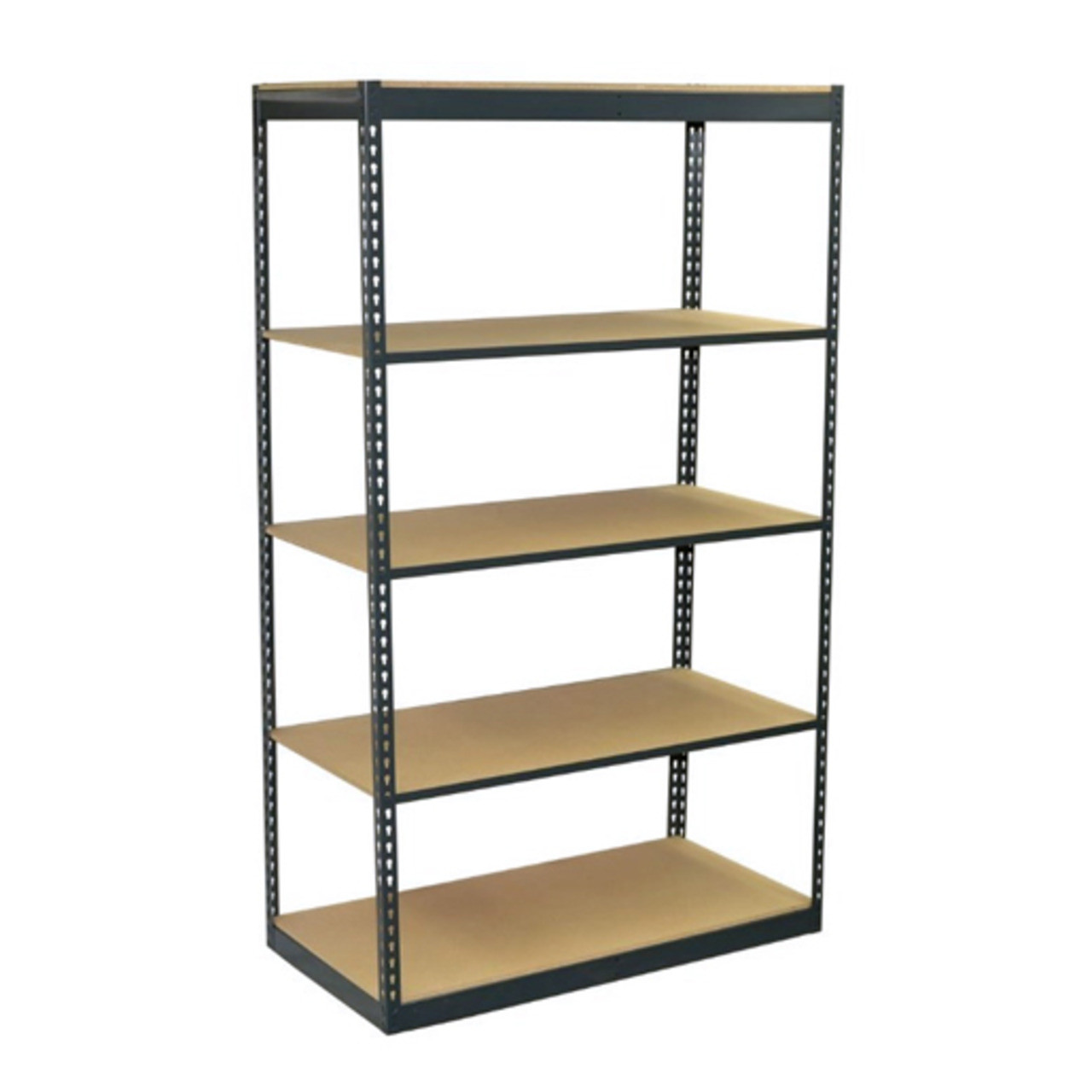
Browse our Shelving Systems
A Step-by-Step Guide to Implementing a Slotting Strategy
Implementing a successful slotting strategy requires a data-driven approach and careful planning. Here are the key steps to follow:
1 Collect and Analyze Data: Gather at least a year's worth of data on sales history, SKU velocity, order frequency, and product characteristics (size, weight, etc.). This data will form the foundation of your slotting plan.
2 Categorize Your Inventory: Use the data to classify your inventory. The ABC analysis is a common starting point, but you can also categorize by product family, size, weight, or special handling requirements.
3 Develop a Slotting Plan: Based on your analysis, create a detailed plan for where each category of inventory should be located. Consider your warehouse layout, traffic flow, and material handling equipment.
4 Implement the Plan: Execute the physical re-slotting of your inventory. This may need to be done in phases to minimize disruption to daily operations.
5 Train Your Team: Ensure that all warehouse staff are trained on the new layout and procedures. Their feedback will be invaluable for refining the system.
6 Measure and Refine: Continuously monitor key performance indicators (KPIs) to measure the effectiveness of your new strategy. Be prepared to make adjustments as needed to adapt to changing business dynamics.
Advanced Slotting Techniques
Beyond the core strategies, several advanced techniques can further enhance warehouse efficiency:
- Dynamic Slotting: This approach uses real-time data and algorithms to adjust inventory placement continuously. As demand patterns shift, the system automatically recommends new, more optimal locations. This can lead to significant improvements in throughput, with some studies showing increases of 20-40% [2].
- Heat Mapping: A Warehouse Management System (WMS) can generate heat maps that visually represent picking activity. These maps highlight high-traffic areas and bottlenecks, providing valuable insights for layout optimization.
- Complementary Product Grouping: Items that are frequently ordered together can be stored in close proximity to each other. This reduces travel time for pickers fulfilling multi-item orders.
- Zone-Based Picking: The warehouse is divided into different zones, and pickers are assigned to specific zones. This can improve efficiency by reducing congestion and allowing pickers to become experts in their assigned areas.
Material Flow Conveyors Available

Measuring Success: KPIs and ROI
To justify the investment in a slotting optimization project, it is crucial to track the right metrics. Key performance indicators (KPIs) to monitor include:
- Picking Accuracy: The percentage of orders picked without errors.
- Order Cycle Time: The total time from order placement to shipment.
- Space Utilization: The percentage of warehouse space that is being used effectively.
- Cost Per Pick: The average labor cost associated with picking a single order.
- Travel Time Per Pick: The average time a picker spends traveling between locations.
By tracking these metrics before and after implementation, you can quantify the impact of your slotting strategy and calculate the return on investment (ROI). Many businesses see a significant ROI within the first year of implementing a WMS-driven slotting project [2].

Case Study Example
A mid-size distributor with 10,000 SKUs implemented a smart slotting solution. After six months, they achieved the following results:
- Bin utilization increased by 22%.
- Picker travel distance dropped by 2 miles per shift.
- Picking accuracy improved from 93% to 99.2%.
- Overall throughput increased by 28%.
These improvements resulted in a payback period of less than one year and substantial ongoing savings in labor and operational costs [2].
Mezzanines to help you reach Success!

The Role of Technology in Modern Slotting
Modern warehouse slotting is heavily reliant on technology. A robust Warehouse Management System (WMS) is the cornerstone of any advanced slotting strategy. A WMS can automate data collection, analyze inventory trends, recommend optimal slotting configurations, and guide pickers through the most efficient paths.
When selecting a WMS, look for a solution that offers:
- Advanced Bin Management: The ability to define bin capacities, dimensions, and compatibility rules.
- Velocity-Based Slotting: Tools to track item movement and suggest ideal locations.
- Real-Time Inventory Visibility: Live tracking of every item in the warehouse.
- Integration Capabilities: Seamless integration with your Enterprise Resource Planning (ERP) system and other business software.